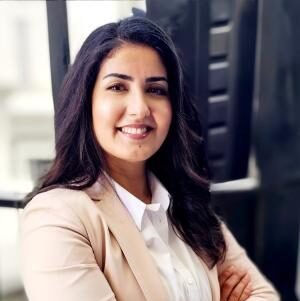
Prof. Mounia Tahiri
Pr. Mounia TAHIRI is an Associate Professor (Habilitated) at the Faculty of Sciences of Rabat, specializing in Geographic Information Systems (GIS) and Satellite Remote Sensing. She obtained her PhD in 2014 from the Faculty of Sciences Ben M’Sik in Casablanca, focusing on the contribution of satellite tools to environmental management. From 2012 to 2020, she worked at the National Agency for the Development of Aquaculture (ANDA) as a GIS manager, gaining strong expertise in spatial analysis applied to aquatic environments. In 2020, she joined the Faculty of Sciences of Rabat as a Lecturer, and in 2024 she obtained the grade of Habilitated Associate Professor. As a member of the Geosciences, Water and Environment Laboratory (LGEE), her research focuses on satellite remote sensing, geographic information systems, and artificial intelligence applied to the study and sustainable management of natural resources. Her scientific collaborations span both national and international levels, as she is involved in several research projects. Since 2024, she has been leading the JEAI-PESAS project (Young Associated Team with IRD – Groundwater Forecasting for Drought Adaptation), which brings together twenty-two researchers, academics, and PhD students. The project aims to develop tools for forecasting groundwater levels and quality by integrating satellite data and in situ measurements, with a particular focus on the Bouregreg basin, in partnership with the Bouregreg and Chaouia River Basin Agency (ABHBC), as well as other national and international partners.
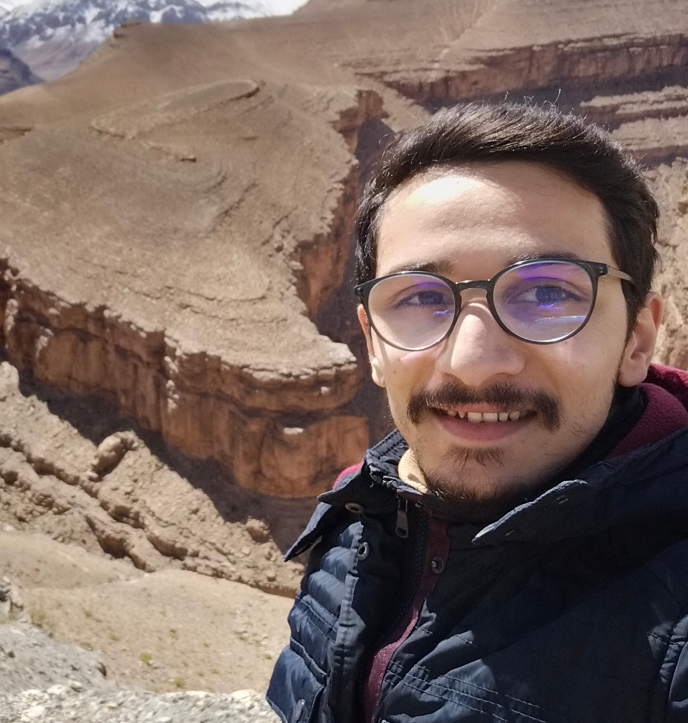
Prof. Tarik Bouramtane
Tarik Bouramtane is an Associate Professor (Habilitated) in Geostatistics at the Faculty of Sciences of Mohammed V University in Rabat (Morocco), within the Geosciences, Water and Environment Laboratory. After completing a Research Master’s degree in Geology, Oceanology, Water and GIS, he obtained his PhD in 2020 in collaboration with the University of Avignon in France, focusing on the multivariate analysis of factors controlling the development of drainage networks in various climatic and geological contexts. His current research focuses on developing innovative approaches that combine remote sensing and artificial intelligence for monitoring and forecasting groundwater resources, particularly in the context of increasing drought. In parallel, he works on the modelling and spatial mapping of natural hazards—such as soil erosion, landslides and land subsidence—using multivariate analysis and machine learning methods. Tarik is actively involved in several national and international research projects and initiatives, including the JEAI PESAS project on groundwater prediction, the CNES RITA project on telluric and anthropogenic risks, the PRIMA MORFeuS project dedicated to operational resilience in the Mediterranean region, the AMIR International Joint Laboratory on responsible mining activities in Morocco, and the interdisciplinary AGRI-MINE project led by CNRS. Through these collaborations, he contributes to developing scientific tools that enhance the understanding, prediction and management of interactions between water resources, soils and environmental risks, providing solutions tailored to Mediterranean and semi-arid contexts.
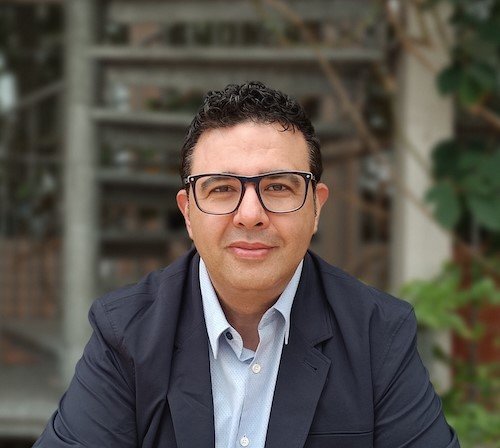
Prof. Essam Heggy
Dr. Essam Heggy is a research scientist at the Electrical and Computer Engineering Department at the University of Southern California and an affiliate of the Earth Science Division of the NASA Jet Propulsion Laboratory, specializing in radar remote sensing. His research focuses on understanding the water cycle in deserts, including river basins and groundwater systems. Dr. Heggy actively participates in various NASA and ESA Earth- and planetary-radar missions. Furthermore, he holds the position of associate professor at the Institut de Physique du Globe de Paris, University of Paris, France, where he specializes in monitoring natural hazards using radar remote sensing. His publication list can be found here: https://orcid.org/0000-0001-7476-2735
Dr. Mohamed CHLIEH
Mohamed Chlieh is a geophysicist and research scientist at the Institut de Recherche pour le Développement (IRD), affiliated with the Institut des Sciences de la Terre (ISTerre) at Université Grenoble Alpes. He earned his PhD from the Institut de Physique du Globe de Paris (IPGP) and studies active tectonics, the seismic cycle, and fault mechanics. His research combines space‑based geodesy, fault‑slip modelling, and broadband seismology to characterize seismic sources, interseismic locking, and fault‑slip evolution in major subduction zones, with key field applications in Sumatra and South America. He has developed methods to map interseismic locking and to improve seismic‑hazard assessment through international collaborations. He is currently involved in several InSAR projects with the Centre National d’Études Spatiales (CNES) to monitor crustal deformation in the Central Andes and northwest Africa.
Prof. Christel PRUDHOMME
Christel Prudhomme is an expert in global hydrology, with over 30 years of experience in research and operations, specialised in understanding and modelling hydrological extremes and their response to weather and climate variability. She leads the Hydrological Monitoring and Forecasting team at the European Centre for Medium Range Weather Forecast, in charge of ECMWF's activities in hydrological forecasting, with an aim to improve overall global hydrological forecast skill at horizons between 1 week and several months, and to develop user-focused hydrological forecast products via a range of complementary approaches including Earth Systems modelling and Machine Learning. She also manages the Hydrological Forecast Computing Centre of the Copernicus Emergency Management Service, responsible for the development, maintenance and operational running of the European and Global Flood Awareness Systems.
Prof. Bertil NLEND
Dr. Bertil Nlend is a hydrogeologist with extensive experience in developing sustainable solutions to improve water management and groundwater protection in coastal zones and urban contexts working in Cameroon, Benin, Chad, Central African Republic, Gabon, Rwanda and France. He works at the University of Douala as an associate professor. His research focuses on aquifers recharge and dependent ecosystems, surface water and groundwater contamination, with emphasis on the impact of urbanisation. Bertil is involved in various scientific organisations and the co-leader of the urban water working group. He also contributes to teaching and supervising MSc students and Ph.D. candidates.
Prof. Sakaros BOGNING
Sakaros Bogning is a Senior Lecturer at the University Institute of Technology of the University of Douala, where he has taught since 2020. His research focuses on spatial hydrology and the analysis of climate teleconnections in Central Africa. His academic background includes a PhD in spatial hydrology (University of Douala, 2020) and two masters degrees in physical oceanography (Université Toulouse III – Paul Sabatier, 2015) and environmental physics (University of Yaoundé 1, 2011).
Prof. Ismail MOHSINE
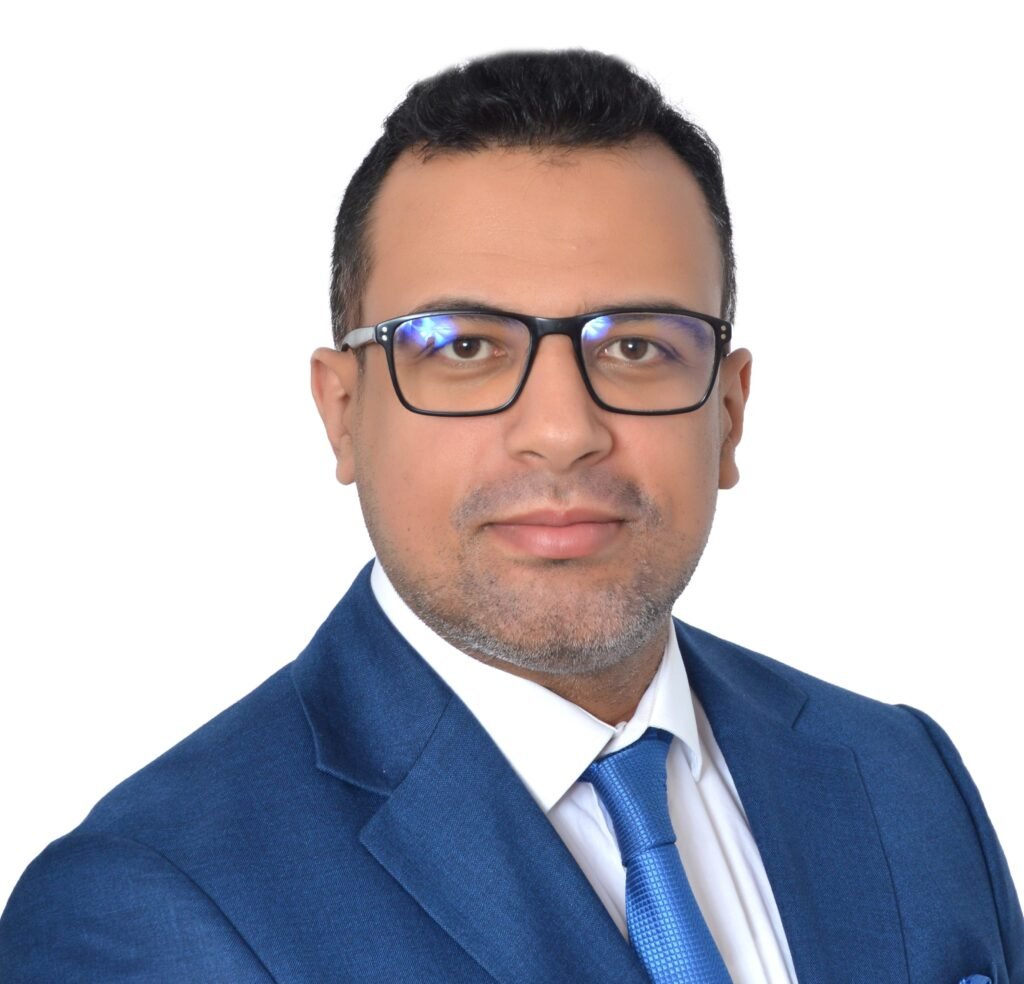
Ismail Mohsine is associate professor at faculty of sciences UM5, He holds a Bachelor's degree in Earth Sciences from Mohammed V University in Rabat and a specialized Master's degree in Geographic Information Systems (GIS) and Remote Sensing. He completed his PhD research on the application of machine learning and deep learning techniques to analyze the spatio-temporal variability of groundwater quality in the Provence-Alpes-Côte d’Azur region, France. Subsequently, he carried out a postdoctoral fellowship at the University of Avignon, focusing on artificial intelligence applications for groundwater resource modeling and prediction. Alongside his academic career, he worked as an international expert for UNESCO in the field of hydrogeological modeling. He is also a member of the JEAI PESAS research project, which is dedicated to integrating artificial intelligence into hydrological systems. As author and co-author of several scientific papers published in peer-reviewed international journals, he actively contributes to collaborative research projects addressing the study and sustainable management of aquifers.
Dr. Nour EL Houda Karmouda
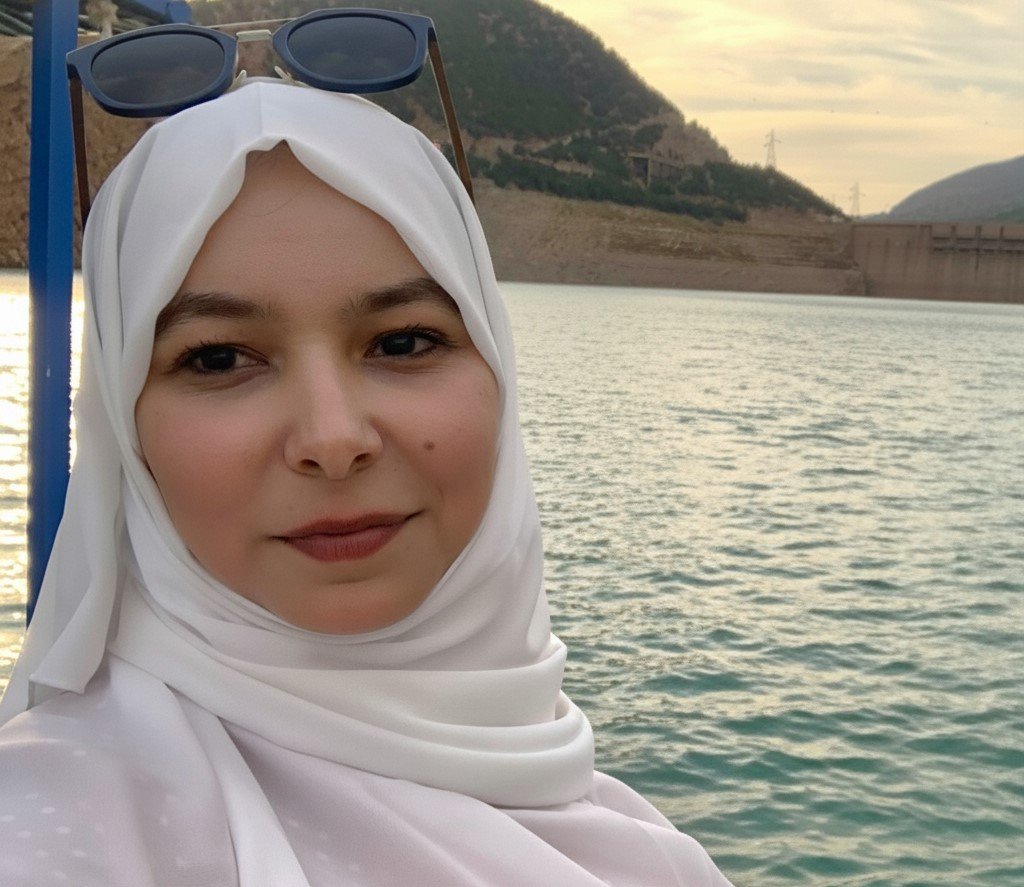
Nour EL Houda Karmouda obtained her PhD in Earth Sciences from the Faculty of Sciences of Rabat in 2023, specializing in hydrology, modelling, and geostatistics. Her doctoral research focused on hydrological modelling by comparing a conceptual approach (GR4J), a physically based model (HEC-HMS), and artificial intelligence (LSTM). She holds a Master’s degree in Science and Technology with a specialization in Surface Hydrology and Water Quality (2015), as well as a Bachelor’s degree in Science and Technology, Water and Environment track (2013). Her scientific activities focus on hydrological modelling and water resources management. She is a member of the organizing committee of the 5th International Conference on African Rivers (ICAR 2026) and is part of the JEAI team associated with IRD (France), working on groundwater forecasting for drought adaptation. She has also completed several research internships, notably at the Department of Earth Sciences of the Faculty of Sciences of Rabat, the Directorate of Water Research and Planning (DRPE), the Mediterranean Laboratory of Buildings and Roads in Fez, and at the OCP Group facilities in Jorf Lasfar.
Dr. Laurent Froideval
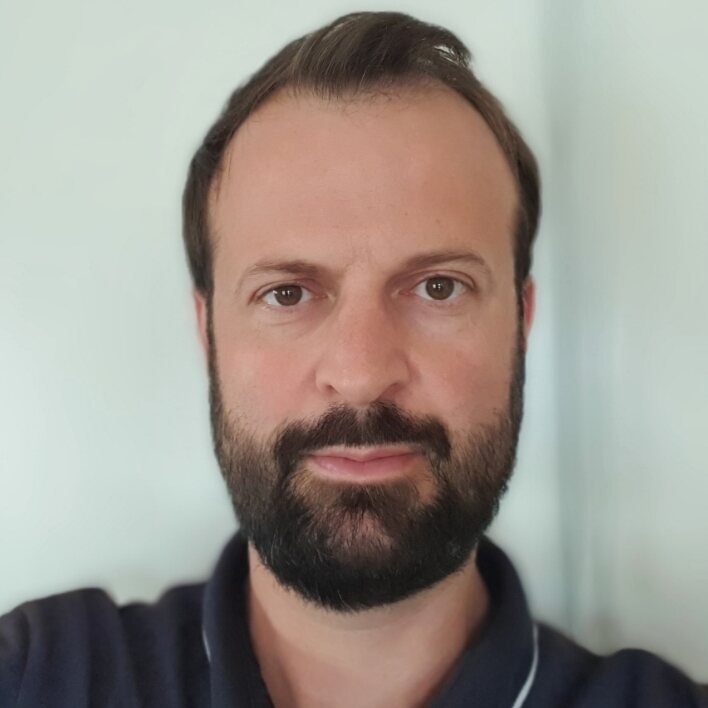
Dr. Laurent Froideval works at CNRS (France) at the interface of remote sensing, geodesy, and environmental monitoring. He specializes in airborne LiDAR, drone based mapping, and photogrammetry, with multi-sensor data fusion for high resolution terrain digitization and coastal/hydrological applications. His work spans mission planning and acquisition (drone/aircraft surveys), precise georeferencing, and advanced point-cloud analytics (quality assessment, segmentation/classification, DTM/DSM generation, change detection), including machine learning based feature extraction. He also contributes to satellite Calibration/Validation activities (e.g., SWOT related applications) and is the scientific lead of a dedicated CNRS training course on LiDAR and photogrammetry, delivered for 5+ years, combining lectures and hands-on sessions on instrumentation, measurement, modeling, and practical open-source workflows.